
Dehumidified Is Not Just “Dry”: Why Moisture Control Is One of the Most Overlooked Health Decisions We Make at Home
A building-science look at the 40–60% humidity ‘sweet spot’—and why stability matters more than feeling ‘dry’.
When people talk about indoor comfort, they usually mean temperature. Warm enough in winter. Cool enough in summer. Humidity barely gets a mention. That omission matters more than most of us realise.
Indoor air that’s consistently too humid doesn’t just feel uncomfortable. It quietly alters the biology of our homes, creating conditions that favour mould growth, dust mites, and the persistence of airborne allergens. Over time, those conditions affect respiratory comfort, sleep quality, and even how long our buildings last. This isn’t lifestyle advice. It’s building science.
The science of humidity, not the myth of “dry air”
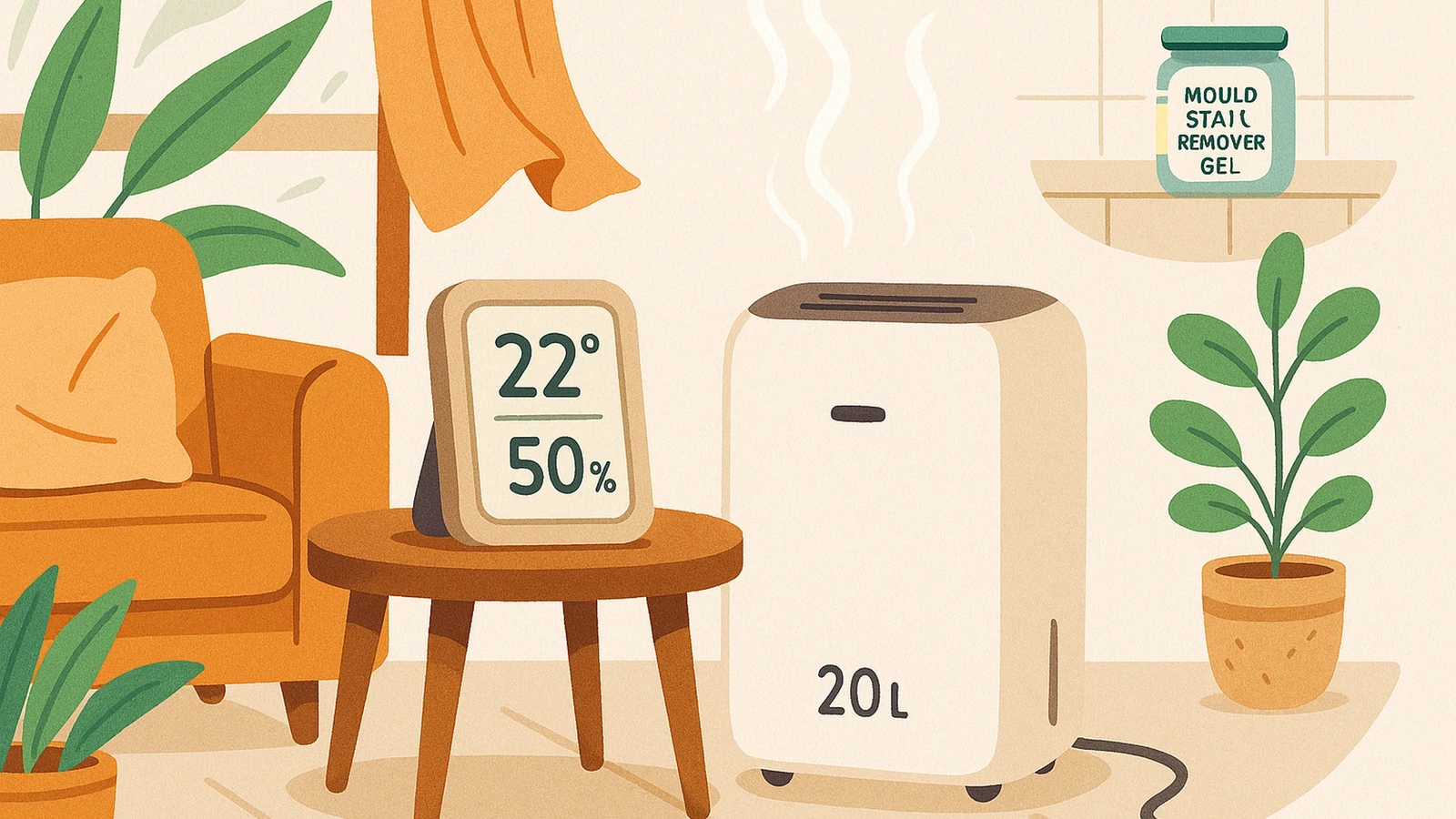
Most research converges on a relatively narrow band for healthy indoor humidity: roughly 40–60% relative humidity.
Below that range, air can feel irritating to skin and airways. Above it, something more structural happens. Mould spores proliferate. Dust mites multiply. Moisture clings to cold surfaces and lingers in soft furnishings. Airborne irritants stay suspended longer.
What makes this tricky is that most people don’t actually know where their home sits. “It feels damp” isn’t a measurement. It’s a hunch. This is why simple tools like a basic digital hygrometer can be unexpectedly useful, not as a gadget, but as a reality check. Devices such as the ThermoPro TP50 Digital Thermo-Hygrometer give you an actual number to work with, turning guesswork into something measurable.
A brief but important note on asthma
This matters disproportionately for people living with asthma.
Humidity does not cause asthma, but it strongly influences symptom frequency and severity. Persistently humid homes increase exposure to dust mites and mould, while air that becomes too dry can irritate the airway lining. Research consistently shows better asthma control when indoor humidity stays stable, rather than swinging between extremes.
For many families, asthma is where the impact of moisture becomes impossible to ignore. It’s often the first signal that the indoor environment isn’t working as well as it could.
Ventilation helps. Moisture control solves the problem.
Ventilation dilutes moisture. Dehumidification removes it.
In modern, well-insulated homes, moisture from cooking, bathing, drying laundry, and even sleeping often builds up faster than passive airflow can clear it, particularly in colder months. This is why opening windows rarely fixes condensation or musty rooms for good.
A properly sized dehumidifier changes the equation by actively extracting water from the air and holding humidity within a healthier range. Mid-capacity units designed for everyday use, such as the Pro Breeze® 20L/Day Dehumidifier with Digital Humidity Display, tend to work well in real homes because they balance extraction power with usability rather than chasing headline specs.
This isn’t about making the air “dry”. It’s about restoring balance.
The hidden knock-on effects most people miss
What surprised us while researching this topic was how many secondary benefits are supported by evidence, yet rarely discussed.
Dryer air warms more efficiently, reducing heating demand. Condensation drops, protecting walls and windows. Furniture, clothing, and electronics last longer. Many people also report better sleep once humidity is stabilised, particularly when the air feels easier to breathe at night.
In homes with persistent damp, stepping up to a higher-capacity unit can make the difference between slow improvement and meaningful change. Larger-capacity models like the Max 25L/d Dehumidifier for Home are often less about comfort tweaks and more about breaking a long-standing moisture cycle.
These aren’t cosmetic upgrades. They’re signs the home itself is functioning more healthfully.
Why this matters now more than ever
As homes become more airtight for energy efficiency, moisture problems don’t disappear. They concentrate.
Add in hybrid working, wetter winters across much of the UK, and more time spent indoors, and humidity becomes a background factor that compounds quietly over time. The challenge isn’t awareness. It’s knowing when a problem is real, and choosing tools that actually get used day after day.
Turning science into sensible choices
That’s why we put together a practical, product-led guide on The Product Wheel. The goal wasn’t to sell appliances, but to translate building science into decisions that make sense in lived-in homes.
Moisture is one of the few environmental factors we can actively control. And sometimes the most important home upgrades don’t change how a space looks.
They change how it behaves.